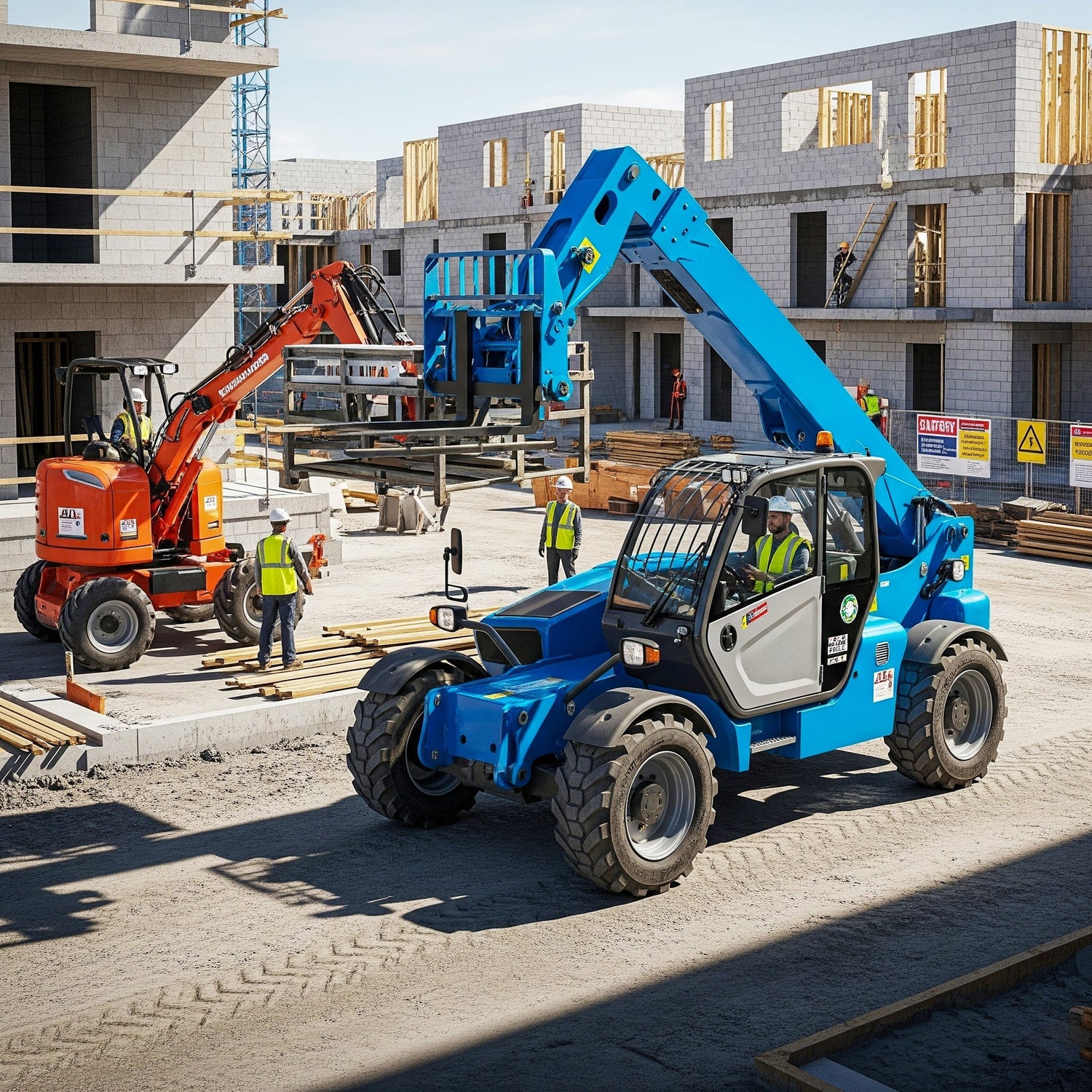
Choosing the right scissor lift depends heavily on where it will be used. Indoor and outdoor environments present very different demands on equipment performance, surface interaction, and stability. On projects that are actively under construction, understanding these differences helps every construction worker select equipment that operates safely and efficiently within the jobsite environment.
Electric slab lifts and rough terrain scissor lifts are designed for distinct surface conditions, so matching the lift type to the environment prevents issues related to mobility, instability, and unnecessary downtime. Let's dive in and explore some of the key factors you should be aware of when selecting the right equipment fit for your project.
Tire Selection and Surface Interaction
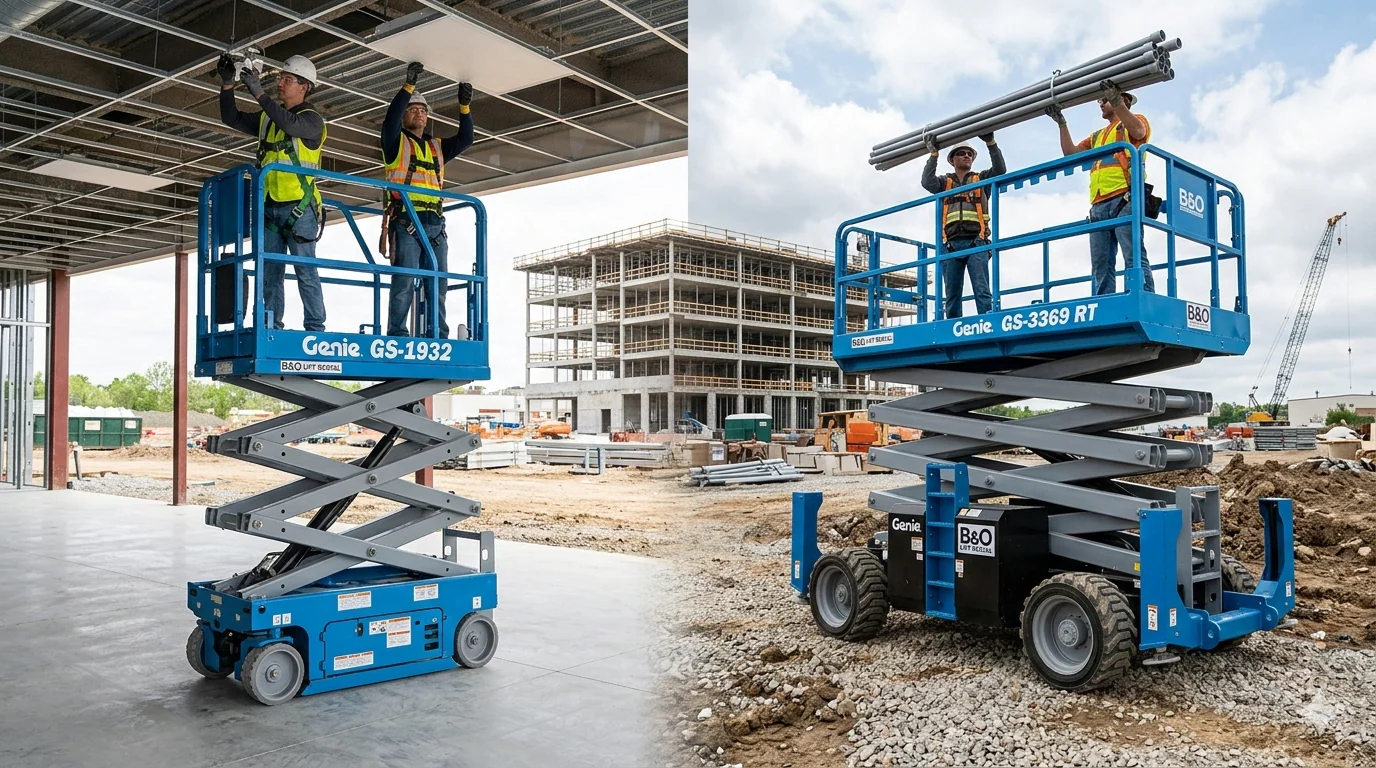
First up are tires. Tires play a critical role in how a scissor lift performs across different surfaces, and different types determine traction, floor protection, and overall stability. Indoor surfaces, such as finished concrete, require a different approach than outdoor terrain that may include gravel, soil, or uneven ground. Let's go over some different types of tires and their link to the various surfaces one might encounter in a construction project:
Non-Marking Tires vs Rough Terrain Tires
Weight Distribution and Stability
Weight distribution affects how stable a scissor lift remains at height, whereas stability depends on the relationship between the platform load, the base dimensions, and the surface beneath the machine. Indoor and outdoor conditions influence how that stability is maintained, impacting a machine's performance capabilities.
Center of Gravity Changes Indoors
Platform Capacity by Environment
Platform capacity varies by lift type and intended use. Most scissor lifts used in construction have rated capacities ranging from approximately 500 pounds to 2,500 pounds, depending on size and configuration. However, environmental conditions can influence how much weight can be safely managed:
Material Handling Indoors
Mobility Constraints in Tight Work Areas
Indoor environments often present narrow corridors, door frames, and confined spaces, while outdoor sites may include obstacles such as debris piles or uneven grading. Mobility considerations affect both safety and productivity in several different ways:
Turning Radius Limitations
Choose the Right Scissor Lift at B&O Lift Rental
Selecting the right scissor lift means accounting for a wide array of factors, such as surface type, platform capacity, height requirements, and mobility constraints. Luckily, at B&O Lift Rental, we help contractors choose equipment that performs reliably, whether the job is indoors or outdoors.
If your project is under construction and requires stable access at height, our team can help you rent a scissor lift that matches your environment and keeps your crew working safely and efficiently. Get in touch with us, and we'll gladly guide you through our catalog to find the right fit for your project.