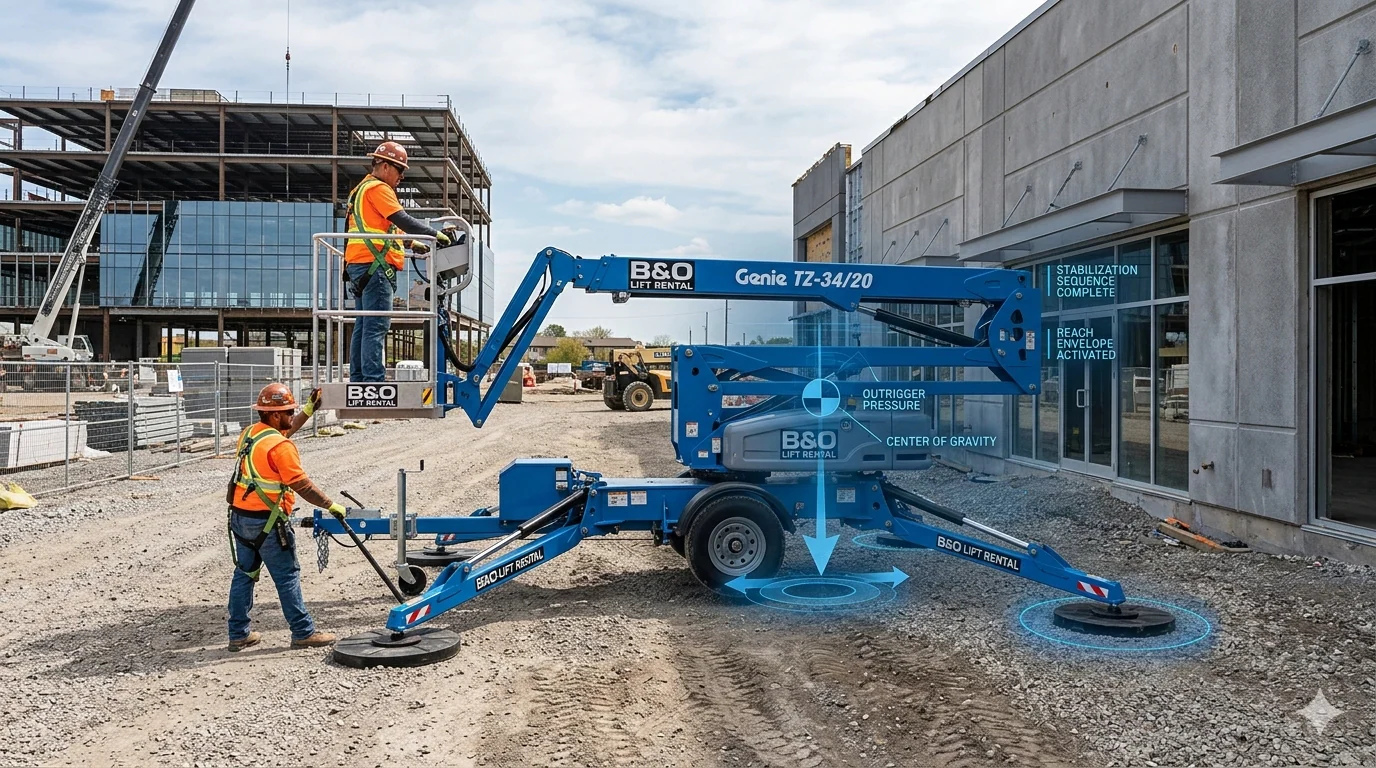
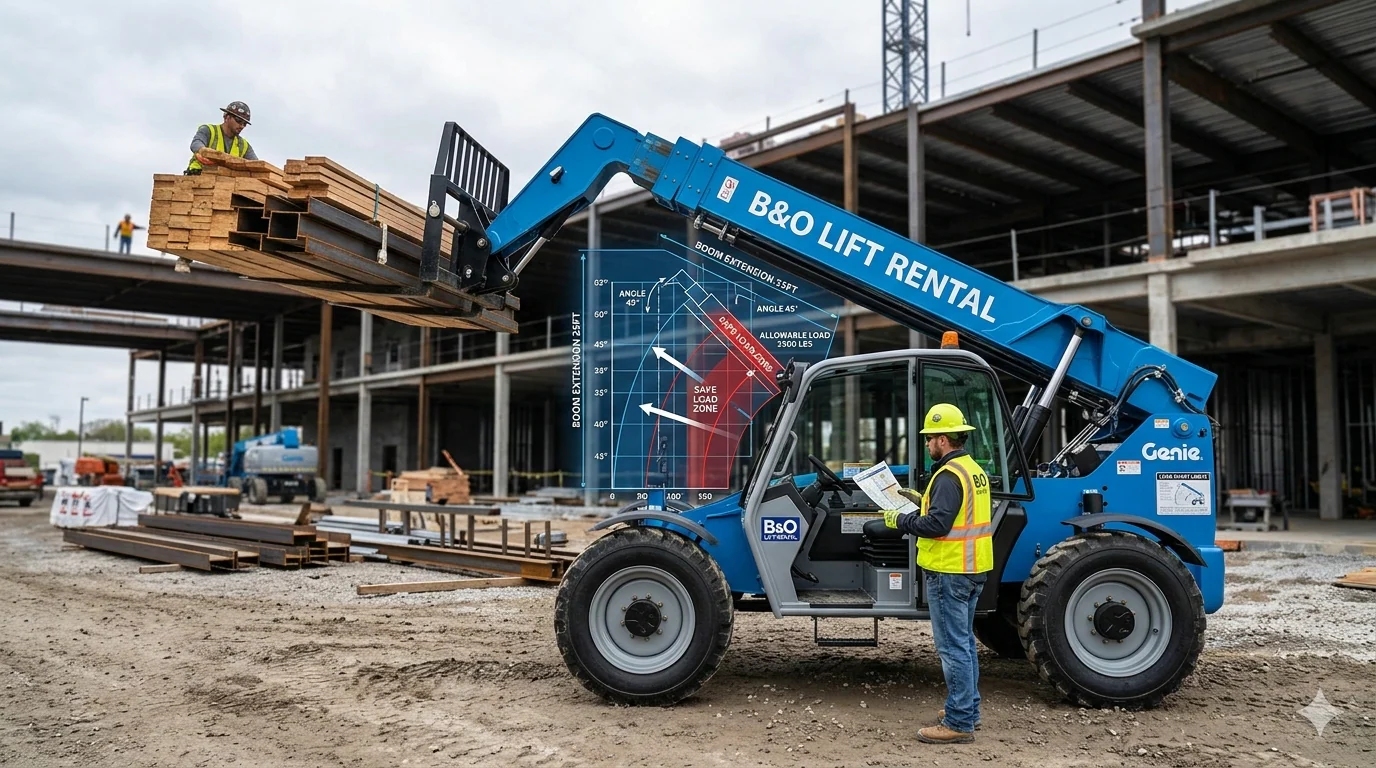
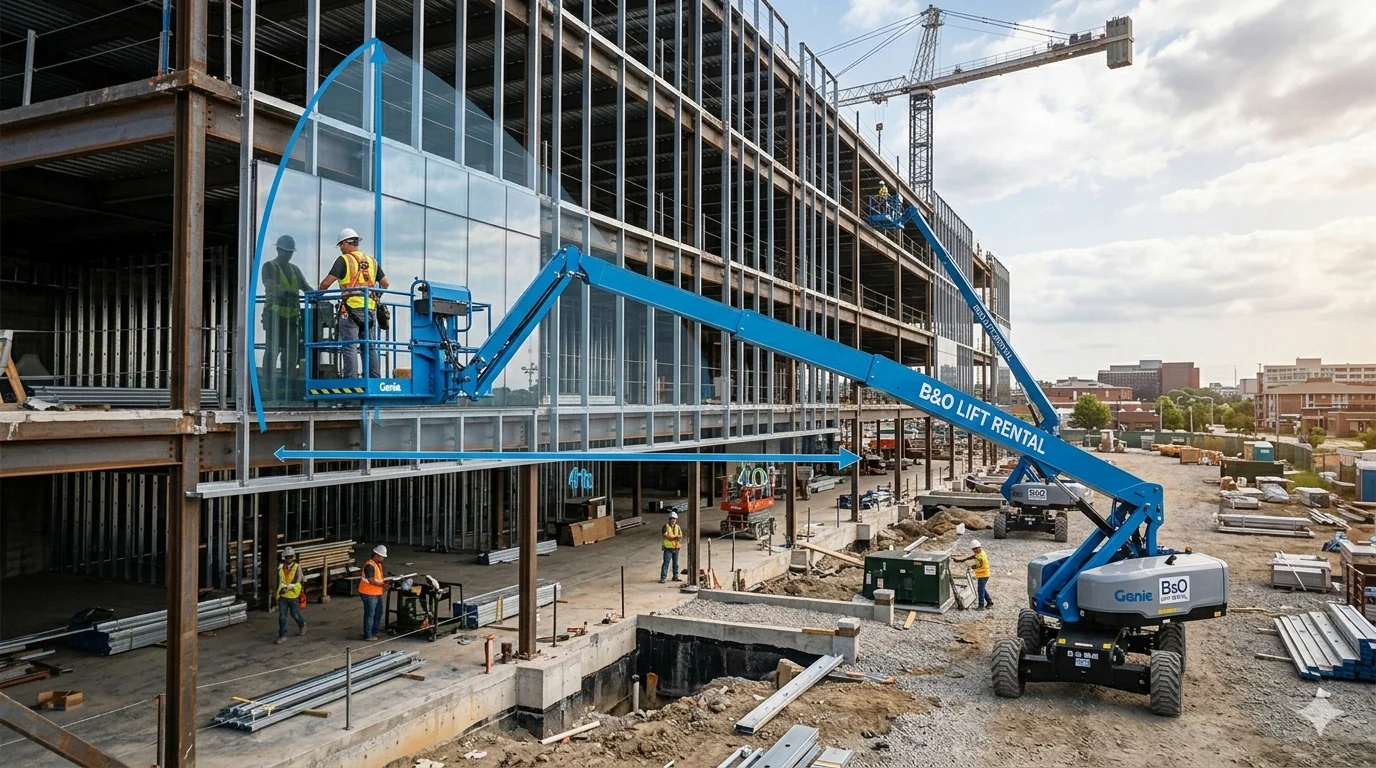
A telehandler is designed to move heavy materials across challenging job site conditions. As opposed to standard forklifts, telehandlers are built to operate on uneven ground that is common on an active construction site. However, terrain variation directly affects load stability, reach limits, and overall machine performance.
For any construction worker operating a telehandler, understanding how slope, ground condition, and load movement interact is essential for maintaining safe lifting operations. Let's jump in and look at the various factors you should be aware of when looking to optimize telehandler performance on your construction site:
Axle Articulation and Ground Contact
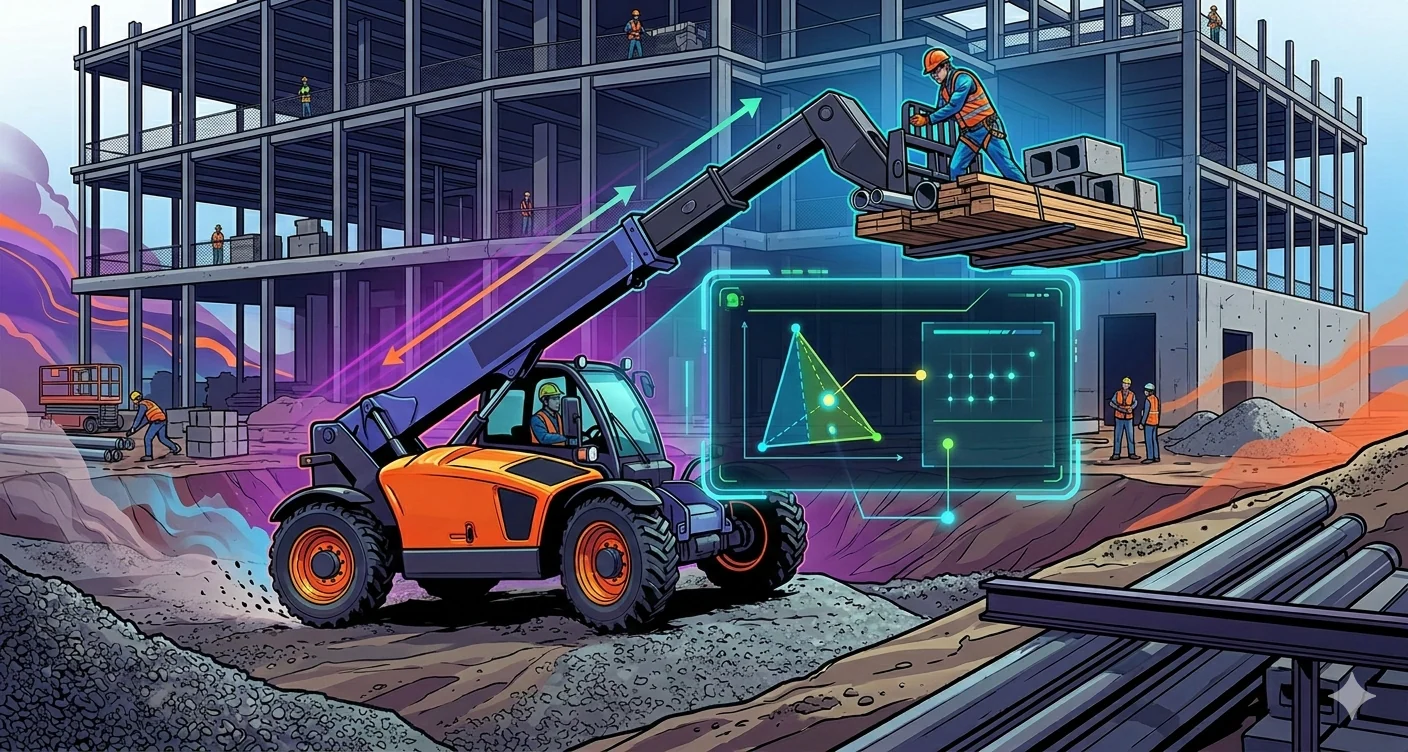
An important feature of telehandlers is that they are equipped with oscillating rear axles that allow them to maintain ground contact on uneven terrain. This articulation improves traction and helps distribute weight across all tires. However, you should keep in mind that axle movement also affects stability when lifting loads at height.
Frame Leveling vs Manual Adjustment
Load Chart Adjustments on Sloped Terrain
As we've mentioned previously, load charts are based on ideal conditions, typically firm and level ground. When operating on a slope, those published capacities may no longer apply. Why? Because a slope introduces additional forward or lateral force that changes how the load weight interacts with the machine's center of gravity, thus readjusting a telehandler's weight distribution and capacity.
Forward Reach Reduction on Inclines
Center of Gravity Shifts During Lift
As the boom extends or raises, the machine's combined center of gravity moves. This shift is more pronounced when handling loads at longer reach distances, and the farther the load is from the front axle, the greater the tipping force applied to the machine.
Dynamic Load Movement
Pre-Lift Calculations Contractors Must Perform
We've said this before, and we'll say it again. Failing to plan is planning to fail. So before lifting, contractors must evaluate both terrain and load requirements. Proper assessment prevents instability and equipment damage, and pre-lift calculations should consider weight verification, reach requirements, and surface evaluation.
Ground Bearing Assessment
Buy the Right Telehandler at B&O Lift Rental
When it comes to choosing the right telehandler for uneven terrain, we've already established that it involves more than selecting maximum lift height, since you must also evaluate axle articulation, frame leveling capability, load chart limits, and ground conditions.
But as it just so happens, at B&O Lift Rental, we help contractors select telehandlers designed to safely carry heavy materials on active construction sites. Our team is locked and loaded to guide you toward equipment that matches your reach requirements, terrain challenges, and stability needs so your crew can operate with confidence.
Your move. Talk soon!